
Introduction
Starting a fitness journey may seem difficult at first, but the truth is, it doesn’t have to be. You don’t always need a gym membership, expensive equipment, or even a personal trainer to get fit. Instead, you can begin right at home with very simple steps. All you need is a little motivation and some consistency.
In this article, we will guide you step by step on how to start your fitness journey at home. First, we will talk about setting clear goals. Then, we will move on to choosing the right exercises. After that, we will explain how to create a routine and eat the right foods. The best part is that every tip is beginner-friendly, very simple, and easy to follow.
Why Start at Home?
First of all, let’s understand why beginning a fitness journey at home is such a smart choice. There are many reasons, and each one makes the process simple and stress-free.
-
Convenience – You don’t need to travel to a gym. Instead, you can use your living room, bedroom, or even your backyard as your workout space.
-
Cost-effective – You don’t have to spend money on expensive memberships or big machines.
-
Privacy – You can exercise freely without feeling shy, nervous, or judged by others.
-
Flexibility – You get to decide the time and the routine that works best for your lifestyle.
In short, if you want comfort, save money, and enjoy more flexibility, then starting your fitness journey at home is the perfect option.
Step 1: Set Clear Fitness Goals
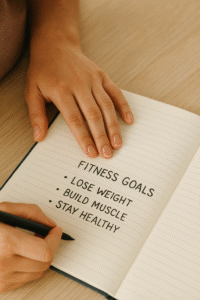
To begin with, every journey starts with a destination in mind. In the same way, a fitness journey also needs a clear destination, which is your goal. Without a goal, it becomes easy to feel lost, unmotivated, or even give up too soon.
Therefore, ask yourself a few simple questions:
-
Do you want to lose weight?
-
Or do you want to build muscle?
-
Or maybe you want to improve your flexibility and stamina?
Once you decide, the next step is to write your goals down. For instance, you can say:
-
“I want to lose 5 kg in three months.”
-
“I will exercise 20 minutes every day.”
In addition, it is always better to set SMART goals – Specific, Measurable, Achievable, Realistic, and Time-bound. This way, your fitness journey will not only feel more clear but also more structured and easier to follow.
Step 2: Start Small and Simple
At the beginning, it’s very important not to push yourself too hard. Many beginners make the mistake of trying to do everything at once, and as a result, they often feel tired, sore, and unmotivated. Instead of doing too much, focus on taking small and simple steps.
For example, you can:
-
Start with just 10 minutes of exercise each day.
-
Add light activities such as walking, stretching, or simple bodyweight moves like squats or push-ups.
-
Then, little by little, increase the duration and intensity as your body becomes stronger.
In addition, remember that your fitness journey is a marathon, not a race. That’s why it’s better to build habits slowly rather than rushing. For instance, if you can only do five push-ups today, don’t worry. Over time, you may reach ten, twenty, or even more.
Furthermore, starting small helps you stay consistent. When your workouts are short and easy, it feels less stressful, and you are more likely to continue. On the other hand, if you start with very tough workouts, you may quit after just a few days.
In this way, small steps make the journey easier, safer, and more enjoyable. Step by step, you will notice progress, and that progress will motivate you to keep going.
Step 3: Choose Easy Home Workouts
The good news is that home fitness does not require fancy machines or heavy equipment. In fact, you can get great results using only your body weight. This means that even beginners can start right away without spending extra money.
To begin with, always start your workout with a short warm-up. For example, you can try:
-
Jumping jacks
-
Arm circles
-
Light jogging in place
Next, move on to simple bodyweight exercises. These exercises are very effective because they use your own body as resistance. For instance, you can do:
-
Push-ups (or start on your knees if it feels hard)
-
Squats
-
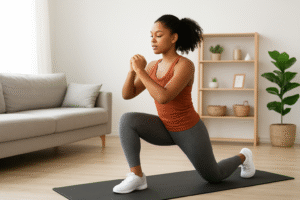
Lunges
-
Plank hold
-
Glute bridges
After that, add some cardio to make your heart stronger and burn extra calories. Here are some easy ideas you can try at home:
-
High knees
-
Mountain climbers
-
Dancing to your favorite music
-
Skipping rope (if you have one)
Finally, don’t forget to cool down and stretch. This step is important because it relaxes your muscles and prevents injuries. For example, you can try:
-
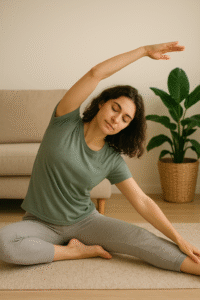
Forward fold stretch
-
Shoulder stretch
-
Deep breathing exercises
👉 Tip: Try this routine 3–4 times a week. In the beginning, keep it short and easy. Over time, slowly increase the number of repetitions and sets. This way, your body will get stronger without feeling overloaded.
Step 4: Create a Simple Schedule
When it comes to fitness, consistency is the real secret. Doing a workout once in a while won’t give you results. That’s why it’s very important to follow a simple schedule. A schedule helps you stay organized and keeps you on track.
For example, here’s a weekly plan you can try:
-
Monday – Full body workout (20 minutes)
-
Tuesday – Cardio session (15 minutes)
-
Wednesday – Rest day or light yoga
-
Thursday – Strength training (20 minutes)
-
Friday – Cardio + abs (20 minutes)
-
Saturday – Active fun such as dancing, walking, or playing a sport
-
Sunday – Rest and recovery
As you can see, this plan balances strength, cardio, and recovery. In addition, it includes fun activities so you don’t get bored. Over time, you can adjust the schedule by adding more minutes or trying new exercises. In this way, your routine will always stay fresh and enjoyable.
Step 5: Focus on Nutrition
Now that you have a workout routine, the next step is food. Exercise alone is not enough to get results. In fact, what you eat plays an even bigger role in your progress. Many fitness experts say, “Fitness is 70% diet and 30% exercise.” This means that eating right is just as important as working out.
Here are some simple nutrition tips:
-
Eat more vegetables, fruits, and whole grains to give your body energy.
-
Add protein sources like eggs, chicken, fish, beans, or lentils to build strong muscles.
-
Drink enough water—at least 6 to 8 glasses daily—to stay hydrated.
-
Avoid too much sugar, junk food, and fried snacks because they slow down progress.
-
Eat smaller, balanced meals instead of very heavy ones.
In addition, try to plan your meals ahead of time. For example, you can prepare a healthy lunch box or keep fruits ready as snacks. This way, you won’t reach for unhealthy options when you feel hungry.
To sum up, nutrition fuels your body, gives you energy, and helps you recover faster. So, if you want real results, pay attention to your food just as much as your workouts.
Step 6: Stay Motivated
When you exercise at home, it can be tempting to skip workouts. There are always distractions such as TV, phone, or house chores. That’s why staying motivated is very important. Without motivation, it’s easy to stop after just a few days.
Here are some simple ways to stay on track:
-
Track your progress – Write down your workouts in a notebook or use a free fitness app. In this way, you can see how far you’ve come.
-
Celebrate small wins – Even completing one week of exercise is an achievement. So, reward yourself with something healthy like a smoothie or a fun activity.
-
Workout with a friend online – Because having someone to exercise with makes you more consistent.
-
Watch fitness videos – They inspire you and remind you that progress takes time.
-
Remind yourself why you started – Was it weight loss, better energy, or overall health? Whenever you feel lazy, think about your reason.
To sum up, motivation is like fuel for your journey. If you keep yourself inspired, you’ll stay consistent and reach your goals step by step.
Step 7: Use Minimal Equipment (Optional)
The best part about home workouts is that you don’t actually need equipment. However, if you want to make things more fun, a few simple tools can help.
For example, you can use:
-
A yoga mat for comfort during floor exercises
-
Resistance bands for strength training
-
Dumbbells (or even water bottles) as weights
-
A skipping rope for cardio
In addition, these tools are affordable and take very little space at home. So, you can slowly collect them as you move forward in your fitness journey.
Step 8: Rest and Recovery
Finally, don’t forget that rest is also part of fitness. Many people think only exercise matters, but that’s not true. In reality, your body needs time to repair and grow stronger.
Here are some simple tips for proper recovery:
-
Sleep at least 7–8 hours every night so your body gets enough rest.
-
Take rest days in between workouts to avoid injuries and burnout.
-
Do stretching or light yoga on easy days to keep your body relaxed and flexible.
In short, exercise and rest go hand in hand. If you balance both, your body will become stronger, healthier, and more energized.
Common Mistakes to Avoid
When starting at home, beginners often make simple mistakes. These mistakes can slow down progress or even cause injuries. That’s why it’s important to know them in advance and avoid them.
- Starting too hard, too fast – If you push yourself on day one, you may feel sore or even quit. Instead, start slowly and build up gradually.
-
Skipping warm-up and cool-down – Warm-up prepares your body, and cool-down helps you relax your muscles. Without them, you increase the risk of injury.
-
Not drinking enough water – Hydration is key for energy and recovery. So, always keep a water bottle nearby.
-
Expecting instant results – Fitness takes time. Remember, slow and steady progress is better than quick fixes.
-
Comparing yourself to others – Everyone’s body is different. Therefore, focus on your own journey, not someone else’s.
👉 Always keep in mind: Fitness is a journey, not a race.
Benefits of a Home Fitness Journey
The good news is that exercising at home has many amazing benefits. Not only is it convenient, but also it helps you stay consistent in the long run.
-
Saves time and money – No travel or gym fees.
-
Improves physical health – Builds strength, stamina, and flexibility.
-
Reduces stress and improves mood – Exercise releases happy hormones that fight stress.
-
Boosts self-confidence – Achieving small goals makes you feel proud.
-
Helps maintain long-term healthy habits – Because it’s easy and flexible, you’re more likely to stick with it.
In short, home fitness gives you health, happiness, and confidence—all from the comfort of your own space.
Conclusion
To sum up, starting a fitness journey at home is simple if you follow the right steps. First, set clear goals. Then, start small, choose easy exercises, and create a routine that works for you. After that, focus on eating a balanced diet, staying motivated, and taking enough rest.
With patience and consistency, you will see amazing results over time. Always remember, fitness is not about perfection—it’s about progress. And most importantly, the best time to begin is today, right at home.
Leave a Reply