
Overview
Schools are at a very important point today because mental health problems among children and teenagers are increasing everywhere in the world. To begin with, we must ask a simple question: should schools only focus on studies, or should they also support students’ emotions and the Function of Mental Health?
Moreover, this topic matters a lot because youth suicide rates are rising, and many students are facing anxiety and depression. As a result, schools cannot ignore these issues anymore.
Therefore, schools need to think about how they can help students feel safe, supported, and mentally healthy while also learning. In short, taking care of the Function of Mental Health in schools will help students grow both emotionally and academically.
The Role of School Mental Health Services
Today, students face more mental, emotional, and social challenges than ever before. For example, pressure from schoolwork and the influence of social media can easily make children and teenagers feel stressed, worried, or overwhelmed.
Because of this, mental health services in schools are not just helpful—they are truly essential for supporting the Function of Mental Health in students’ daily lives.
In this article, we will clearly explain the purpose and benefits of school mental health services. Furthermore, we will explore how these services can improve students’ emotional well-being, support their learning, and create long-lasting positive effects.
In addition, we will share why every school should treat the Function of Mental Health as a top priority and show simple, practical ways to build a healthier and more supportive school environment.
Finally, we will discuss the common problems schools face and offer easy suggestions for creating campuses that are mentally safe, friendly, and positive for all students.
1. The Importance and Function of Mental Health in Schools
Schools are not just places for learning subjects—they are also social spaces where children learn about themselves, build emotional skills, and practice handling everyday challenges. However, if the Function of Mental Health is ignored, students may face many problems such as:
-
Lower grades and poor academic performance
-
Behavioral issues
-
Trouble making friends or joining social activities
-
Anxiety or depression
-
A higher risk of leaving school early
Because of this, adding mental health services in schools becomes very important. These services help teachers support not only learning but also the overall growth and well-being of each student.
As a result, students can do better in their studies and grow personally with confidence and emotional strength.
2. The Importance of Mental Health in the Classroom and the Function of Mental Health
i. A High-Pressure Environment
To begin with, today’s students face more stress than ever before. For example, they deal with:
-
Competition in school
-
Social media comparisons
-
Peer pressure
-
Family expectations
-
Bullying or discrimination
Because of these pressures, many students start to feel anxious, sad, or have low confidence. Some may even feel so overwhelmed that they think about hurting themselves.
As a result, these emotional struggles can affect their grades, their focus in class, and their overall participation in school activities.
Therefore, understanding the Function of Mental Health in the classroom is very important, as it helps teachers support students not only academically but also emotionally.
Roles of School-Based Mental Health Services and the Function of Mental Health
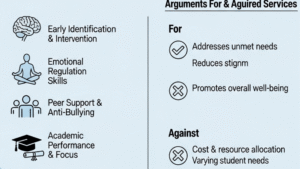
i. Early Detection and Intervention
To begin with, noticing mental health problems early is very important. Teachers, counselors, and psychologists see students every day, so they can quickly identify warning signs such as:
- Big changes in behavior
- Constant sadness or irritability
- Falling grades
- Avoiding friends or social activities
As a result, schools can step in sooner and stop problems from getting worse. This early action supports the overall Function of Mental Health, which is to protect students’ emotional well-being.
ii. Counseling and Emotional Support
Next, school counselors and psychologists provide one-on-one or group counseling. They help students:
- Manage stress and anxiety
- Build self-confidence
- Cope with trauma or grief
- Handle peer or family problems
In addition, they offer a safe and private space where students feel heard, understood, and supported. This service plays an important role in the Function of Mental Health by helping students stay emotionally strong.
iii. Crisis Management
Furthermore, when emergencies happen—such as violence, suicide, or natural disasters—mental health services become extremely important. They can:
- Provide quick emotional support
- Prevent panic or long-term trauma
- Help students and staff process their feelings
Afterward, this support helps everyone return to calmness and emotional balance.
iv. Supporting Academic Success
Mental health and learning always go together. For example, students who feel stressed, sad, or bullied often struggle in school. Mental health programs can improve:
- Focus and concentration
- Motivation and encouragement
- Confidence in abilities
- Goal-setting for academics
Consequently, students’ grades and classroom participation improve. This clearly shows how the Function of Mental Health supports better learning.
v. Family and Community Outreach
Also, schools can connect families with mental health resources. They may:
-
Teach parents about children’s mental health
-
Suggest outside counseling services
-
Organize community workshops or health fairs
Therefore, this teamwork builds strong connections between schools, families, and communities.
vi. Training Staff and Teachers
Finally, schools train staff and teachers to notice emotional struggles and respond with care. Training helps them:
-
Reduce conflicts between students
-
Use trauma-informed teaching methods
-
Communicate effectively with students who are upset or stressed
Thus, teachers can create a positive, supportive, and safe classroom environment where every child feels valued.
3. Alarming Mental Health Data Among Students and the Function of Mental Health
Every year, about 1 in 5 students faces a mental health challenge. This clearly shows how important the Function of Mental Health is in supporting students’ emotional well-being.
Moreover, suicide has become the second leading cause of death among young people aged 15 to 24 around the world. This is a serious sign that students need more emotional support and guidance.
Unfortunately, more than 75% of children with mental health problems do not receive any help. Without support, these problems can become worse and affect their studies, friendships, and daily life.
In short, these numbers are more than simple statistics—they represent real young lives that need care, attention, and strong mental health support in schools.
4. Why Schools Should Have Mandatory Mental Health Services and Support the Function of Mental Health
i. Early Detection and Fast Action
First, when schools make mental health services mandatory, it becomes much easier to:
-
Notice problems early before they become serious
-
Send students for extra help inside the school
-
React quickly during emergencies through crisis teams
As a result, students get the right support at the right time, which is a key part of the Function of Mental Health.
ii. Accessibility and Fairness
Next, when mental health services are required, every student—no matter their family income—can get help.
Therefore, this creates fairness and reduces the gap in access to care.
iii. Reducing Stigma Around Mental Illness
In addition, strong and visible mental health programs help remove shame and fear.
For example, students feel more comfortable talking about their feelings instead of hiding them.
iv. Benefits for Behavior and School Performance
Finally, when students receive proper mental health care:
-
Their grades improve
-
Behavior problems reduce
-
Social and emotional skills become stronger
Consequently, supporting the Function of Mental Health in schools improves both learning and overall well-being.
5. Benefits of Mental Health Services in Schools and the Function of Mental Health
First, school mental health programs help remove the shame or fear around mental illness. Because of this, students feel safe and comfortable asking for help when they need it. This supports the Function of Mental Health, which is to guide students toward emotional well-being.
In addition, these programs improve attendance and help students stay in school. As a result, more students learn better and complete their studies on time.
Moreover, mental health services help reduce violence, bullying, and classroom fights. Therefore, the school becomes a safer and more peaceful place for everyone.
Furthermore, these services support emotional growth and confidence. Students learn simple ways to manage stress, handle challenges, and build healthy daily habits.
Finally, students who receive strong mental health support are more likely to grow into confident, emotionally balanced, and successful adults. In short, supporting the Function of Mental Health in schools creates a better future for young people.
6. Simple Ways to Improve Mental Health Services in Schools and Support the Function of Mental Health
To begin with, schools can make their mental health support stronger by taking a few simple steps.
First, they can hire more experts like social workers and school psychologists. These professionals guide students, listen to them, and help with emotional problems. This directly strengthens the Function of Mental Health in schools.
Next, schools can arrange regular workshops for both students and teachers. These workshops teach everyone about mental health, stress control, and positive communication.
Moreover, adding Social-Emotional Learning (SEL) to the school curriculum can help students practice important skills like empathy, self-control, and teamwork.
In addition, schools can promote peer support programs where students help, guide, and listen to each other. This creates a friendly and caring school environment.
Furthermore, schools should create clear crisis procedures so they can act quickly and safely during emergencies.
In short, schools must value mental health just as much as they value academics or physical fitness. When the Function of Mental Health is supported properly, students become happier, calmer, and more successful in their studies and daily life.

7. Key Features of School Mental Health Programs and the Function of Mental Health
i. Main Parts
First, a good school mental health program should have some simple parts to help the Function of Mental Health.
-
Trained Helpers: Schools should have counselors or psychologists who listen to students and give guidance.
-
Mental Health Lessons: Add short lessons in class to teach students how to care for their feelings and stay strong.
-
Teacher Training: Teachers should know signs of stress, sadness, or worry. This helps them support students before problems grow.
-
Safe Spaces and Peer Groups: Make areas and groups where students feel safe to share their feelings.
-
Crisis Team: Have a team ready to help quickly during emergencies. This keeps everyone safe.
ii. Simple Lessons
Students can learn how to:
- Understand and manage feelings
- Handle stress and worry in easy, healthy ways
- Build confidence every day
- Talk and get along better with others
- Deal with hard situations like grief or trauma
In short, these simple lessons make the Function of Mental Health stronger and help students grow emotionally, socially, and mentally.
8. Examples of School Mental Health Programs Around the World and the Function of Mental Health
i. United States
First, some states like New York and Virginia make mental health lessons required. They also have school counselors and strong rules against bullying. This helps students and improves the Function of Mental Health in schools.
ii. United Kingdom
Next, after COVID-19, the UK started the “Wellbeing for Education Return” program. This gave schools extra money and special teacher training. This helps teachers support students’ feelings better.
iii. Finland
In addition, Finland focuses on the whole child. Schools teach social and emotional skills, encourage good habits, and give free access to school counselors. As a result, the Function of Mental Health becomes part of daily school life.
iv. Pakistan and Other Developing Countries
Finally, in countries like Pakistan, progress is slower because of stigma, less money, and low awareness. However, many NGOs and community groups are trying to give students simple and helpful mental health support.

9. The Role of Teachers and School Staff in Supporting the Function of Mental Health
i. Watching and Helping, Not Therapists
First, teachers do not need to be mental health experts. But, they can watch for signs like sudden anger, staying very quiet, or not joining class activities. These signs show when the Function of Mental Health needs help.
Next, teachers should know how to respond when a student talks about a problem. Using kind words and a calm voice helps the student feel safe and supported.
Finally, if a student needs more help, teachers can guide them to a school counselor or mental health helper. This makes sure the student gets the right care on time.
ii. Simple Classroom Activities
Teachers can do small activities to help students feel better, such as:
- Start the day with short breathing or calm exercises.
- Ask students to write their thoughts in a journal.
- Give tasks that teach kindness and help students understand each other.
In short, these small activities make the classroom calm and help improve the Function of Mental Health for all students.
10. Overcoming Problems in Supporting the Function of Mental Health in Schools
i. Money Problems
First, many schools do not have enough money. This makes it hard to hire helpers or run mental health programs. But, schools can use government money, work with private groups, and help students from families with less money. These steps protect the Function of Mental Health without causing extra problems.
ii. Not Enough Experts
Next, there may not be enough trained counselors or psychologists. To help, schools can work with local clinics, use online therapy, and train new helpers. This way, students still get the emotional help they need.
iii. Parents’ Concerns
Also, some parents may not understand mental health programs. To fix this, schools can hold workshops, have open talks, and involve parents in activities. This helps families see why the Function of Mental Health is important for their children.
iv. Cultural or Religious Beliefs
Finally, cultural or religious ideas can make it hard for some students to get help. To solve this, schools can talk with community leaders and explain mental health in a simple and respectful way. This builds trust, reduces fear, and helps students more.

11. Technology in School Mental Health and the Function of Mental Health
i. Apps and Online Help
First, school counselors can talk to students using safe video calls, like Zoom. Also, apps can help students in many ways. For example, they can:
- Share their feelings without anyone knowing
- Practice calm and relaxing exercises
- Keep track of how they feel each day
These tools support the Function of Mental Health by helping students control their feelings and get help even when they are not in school.
ii. Limits of Technology
However, it is very important to keep students’ information private. Also, online tools cannot replace talking in person with teachers or counselors. So, technology should be used as extra help, not the only way to support mental health in schools.
12. Legal and Ethical Rules for the Function of Mental Health in Schools
i. Permission (Consent)
First, parents and students must say yes before a student gets any mental health help, especially if the student is under 18. This helps keep the Function of Mental Health safe and correct.
ii. Privacy
Next, counselors must keep students’ information private. Only share it if there is a serious safety problem. This helps students feel safe and trust the helpers.
iii. Fairness and Inclusion
Finally, mental health programs should include every student. This means students from different cultures, students with disabilities, and LGBTQ+ students are all welcome. By doing this, schools make the Function of Mental Health fair and helpful for everyone.
13. Evidence of Success and the Function of Mental Health in Schools
To start, a study in the Journal of School Psychology found that students who had help from mental health specialists did better in school and had 25% fewer suspensions.
This shows that mental health support really helps and makes a real difference in schools. Also, it proves how the Function of Mental Health helps students pay attention, control their feelings, and do well in both learning and life with friends.
In short, giving students mental health support is not just helpful—it is very important. It makes schools safe, happy, and better places to learn and grow.
14. Creating a Mental Health-Friendly Campus and Supporting the Function of Mental Health
i. Visual Supports
To start, schools can put up posters and signs about mental health in classrooms and hallways. Also, schools can create “calm zones” or quiet spaces where students can sit, relax, and feel safe. These small changes help students understand the Function of Mental Health every day.
ii. Activities
Next, student clubs or groups can run simple activities like talking circles, wellness projects, or peer support programs. Also, schools can have special events like Mental Health Awareness Week to teach students about feelings and mental wellness. This way, students feel included, happy, and supported.
iii. Recognizing Achievements
Finally, schools can reward students who show kindness, help others, or take care of their feelings. For example, certificates, small gifts, or public praise can encourage other students to do the same. By doing this, schools strengthen the Function of Mental Health and make caring for emotions as important as learning lessons.
In short, using posters, activities, and rewards helps schools become friendly and safe places. As a result, students feel calm, supported, and ready to learn. Supporting the Function of Mental Health helps everyone grow both emotionally and academically.
15. The Future of Mental Health in Education and the Function of Mental Health
i. From Optional to Essential
To begin with, mental health will no longer be an extra or optional part of schools. Instead, it will become a main and necessary part of the education system. Supporting the Function of Mental Health will be just as important as teaching reading, math, or science.
ii. Teaching the Next Generation
In addition, students who learn how to understand and control their feelings are more likely to:
- Do well in their future jobs
- Build strong and positive relationships
- Raise children with good emotional skills
In short, giving attention to mental health in schools today helps create a healthier, wiser, and more successful generation tomorrow. It ensures that the Function of Mental Health becomes a natural part of learning and daily school life.

Conclusion: Supporting the Function of Mental Health in Schools
Yes, schools should have mental health services. Not only should we care about studies and sports, but also about students’ feelings, emotions, and overall well-being. Mental health is just as important as subjects like math, science, or physical education.
Moreover, every child deserves to feel happy, safe, and healthy—not just capable of memorizing facts. When schools take care of the Function of Mental Health, students learn how to manage stress, handle challenges, and build strong social and emotional skills.
In addition, mental health services help students stay focused in class, improve their grades, and develop confidence. They also reduce behavioral problems, bullying, and absenteeism, making the school a positive and safe place for everyone.
Finally, by prioritizing the Function of Mental Health, schools can support both the mind and the heart. As a result, students grow academically, emotionally, and socially. Together, we can create schools that not only teach knowledge but also prepare children for life, helping them become balanced, confident, and successful adults.
Leave a Reply